The Why Behind Pool Safety Barrier Compliance
G'day — it's G. I get asked all the time, "Why are the rules so fussy? It's just a fence." Fair question. So here's the honest answer, without the report-speak.
Queensland's pool barrier laws weren't dreamt up in an office somewhere to cause unnecessary red tape and complexity for pool owners. They were created in response to an alarming increase in child deaths in residential pools.
The good news? When we follow them, they work. Beautifully. That's the part nobody tells you. This page is the long version of that answer — the heartbreaking bit, the hopeful bit, and the practical bit.
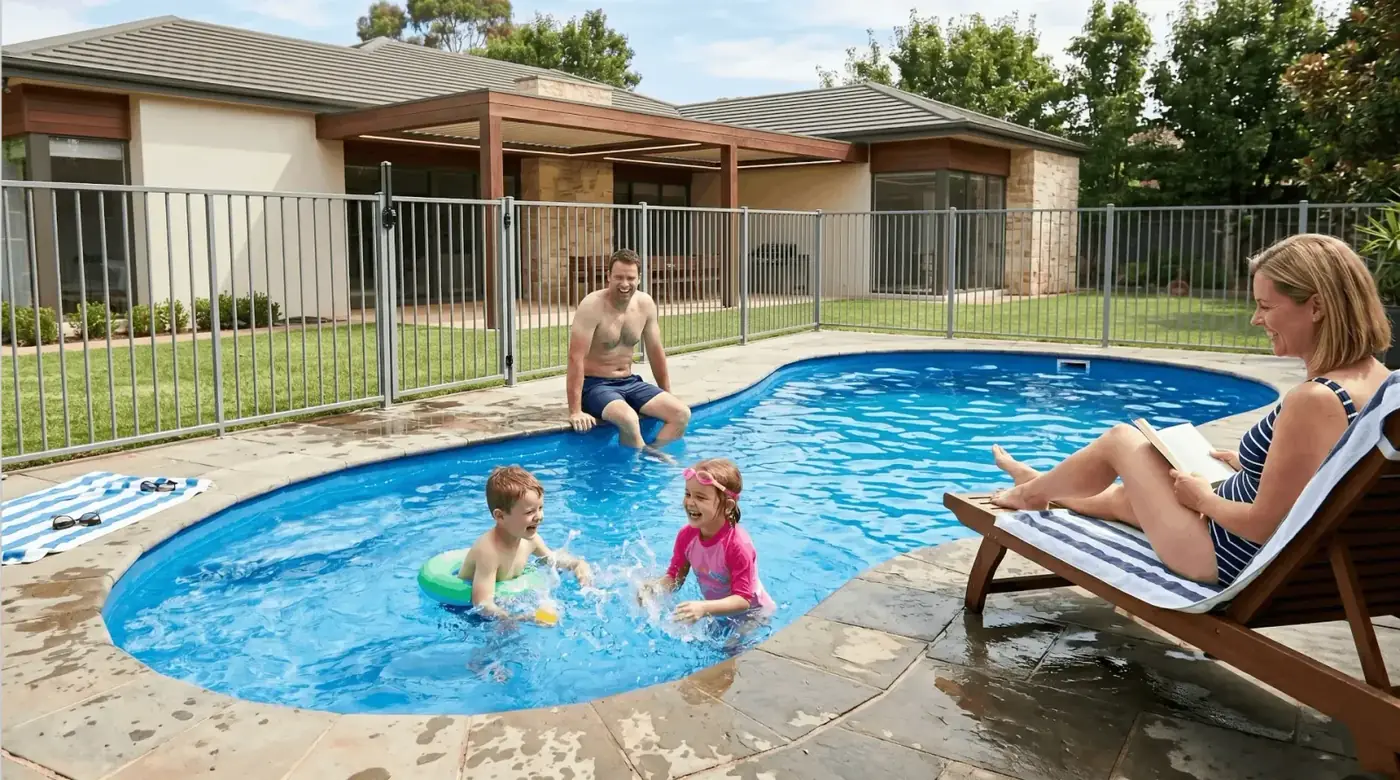
The Queensland Picture
Hard to read, harder to live. These are the Queensland numbers we're trying to bring down — together.
Queensland kids aged 0–4 drowned in regulated pools between 2011 and 2021
QFCC, Swimming pool immersions in Queensland 2011–2021 (2022)
the age fatal pool drownings peak — when toddlers become mobile, long before they understand water
QFCC, Swimming pool immersions in Queensland 2011–2021 (2022)
QLD kids 0–4 needed medical care after a non-fatal pool immersion in the same decade — about 21 near-misses for every death
QFCC, Swimming pool immersions in Queensland 2011–2021 (2022)
and a few centimetres of water is all it takes for a toddler
Kidsafe Australia — Drowning Information Sheet
A pool for every 13 Queenslanders
Queensland has almost 400,000 registered pools — roughly one for every 13 people. South East Queensland alone holds well over 250,000 of them. That's a lot of fences, gates and latches doing quiet work every day.
Source: QFCC, Swimming pool immersions in Queensland 2011–2021 (2022).
Where toddlers actually drown
Nationally, 53% of 0–4 year drowning deaths in 2024/25 happened in a swimming pool, and 73% of all pool drownings were in a private home pool. The backyard is exactly where prevention has to live.
Source: Royal Life Saving Australia, National Drowning Report 2025.
90% of the time, the fence had failed.
When the Queensland Family & Child Commission reviewed every fatal pool drowning of a Queensland child between 2011 and 2021, they found fencing was non-compliant in 90% of cases.
In 65% of those fatal incidents the supervision of the child was also classed as inadequate for the circumstances. And the QFCC flagged a chilling pattern: pool gates being deliberately propped open.
For context — closer to home — a recent Moreton Bay council compliance push found roughly two out of three inspected pools came back non-compliant. Not bad people. Not bad pools. Just little things nobody had looked at in a while.
Sources: QFCC, Swimming pool immersions in Queensland 2011–2021 (2022); Moreton Bay Regional Council media release on pool compliance.
Where the fence actually failed
Of the 36 fatal cases where fencing was non-compliant, multiple defects were found in 78% of cases. Here's what kept failing in Queensland backyards, in the QFCC's own words.
The fencing defects behind the 40 deaths
Number of fatal cases (2011–2021) where each defect was present. Many cases had more than one defect.
Source: QFCC, Swimming pool immersions in Queensland 2011–2021 (2022), Table 5, p.11.
What people were actually doing with their pool gates
Of the 35 fatal incidents where a pool fence existed, 20 of them (57%) had the gate left or propped open when the child got through. The QFCC broke down why:
- 11gates were deliberately propped open — usually for adult convenience, sometimes to let the family dog into the pool area to cool off.
- 6were unintentionally open because the gate no longer self-closed or self-latched. Nobody had fixed it.
- 3had caught on an object — a hose, a toy, a pot — and never closed fully.
- 3further cases involved children climbing the fence or using a nearby object to reach the latch.
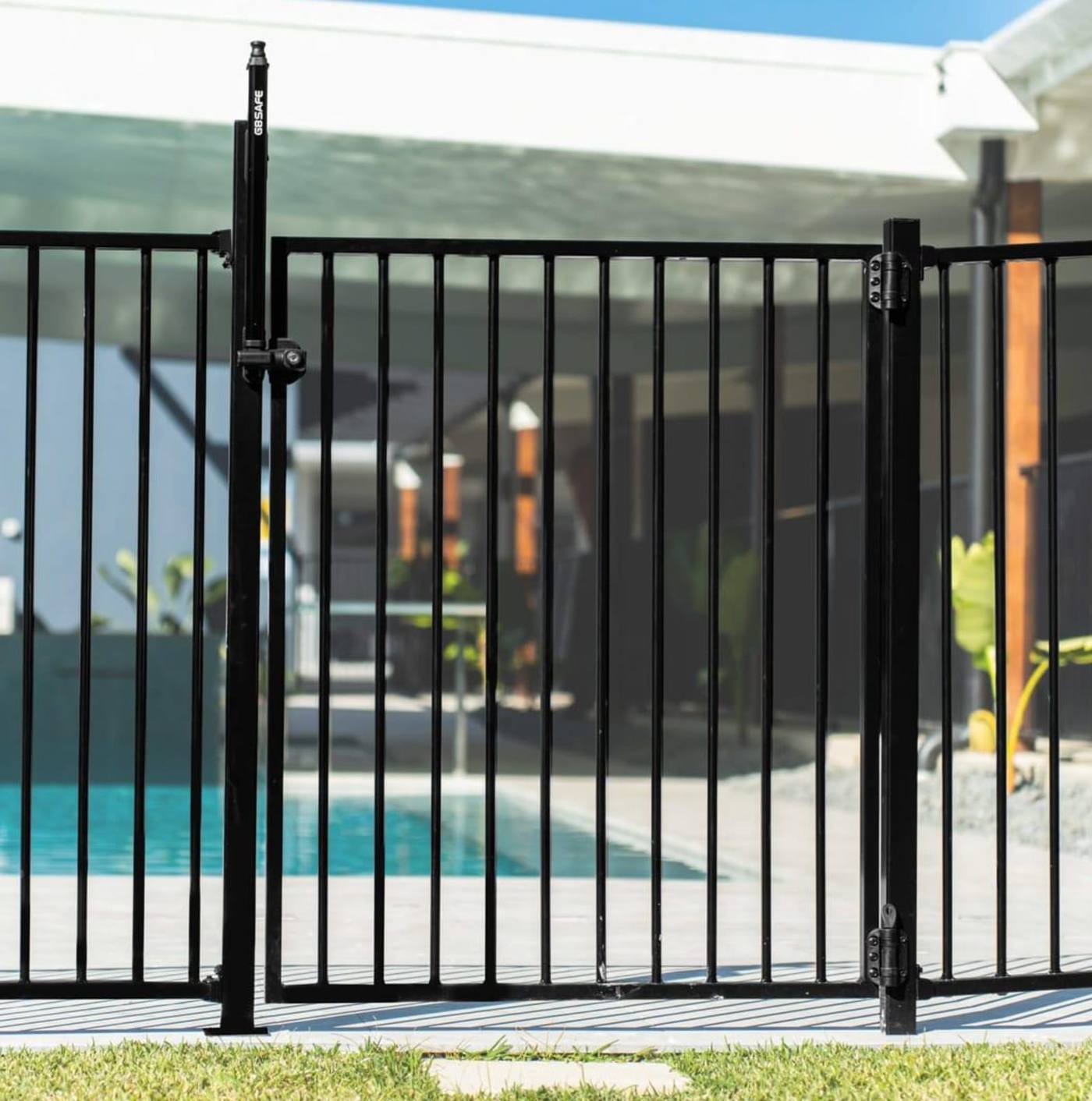
The gate is the single most failed component in a Queensland pool barrier — and the single easiest one to fix.
Failing to keep a pool gate securely closed when not in use is an offence under the Building Act 1975 (s.245T) carrying a maximum penalty over $23,000.
Renting a house with a pool? Read this.
Pool fence compliance is the owner's legal responsibility — even while the property is leased. That doesn't get tenants off the hook either. Here's why both sides need to pay attention.
fatal pool drownings (2011–2021) happened at properties the family was renting.
of those rented properties had non-compliant pool fencing at the time of the incident.
In most cases — owned (11) and rented (10) alike — the family had been in the home for more than 12 months, giving the fence plenty of time to drift out of compliance. The QFCC also noted cases where tenants reported fencing defects to the property manager and the repairs were never completed to a satisfactory standard.
For tenants
If a gate won't self-close, a latch is broken, or anything is climbable inside the pool area, put it in writing to your agent today. Keep the email. Follow up in writing if it isn't fixed.
Under the Residential Tenancies and Rooming Accommodation Act 2008 you also can't wilfully interfere with the fence — no propping the gate open, no moving the BBQ into the Non-Climbable Zone.
For owners & property managers
A pool safety certificate is required between tenancies, but compliance is your duty every day in between. QBCC recommends assessing the fence at every routine inspection.
A $285 inspection is a small price compared with a coroner's finding with your name on it.
Sources: QFCC, Swimming pool immersions in Queensland 2011–2021(2022), p.12; Building Act 1975 s.245U; Residential Tenancies and Rooming Accommodation Act 2008 s.217.
The little things that fail pools
Here's what I actually find in Brisbane backyards, week in and week out. None of them feel dangerous — that's exactly the problem.
Pool gate propped open with a brick, hose or pot plant
Climbable objects — BBQs, planters, chairs, kids' cubby — too close to the fence
Self-closing hinges that no longer self-close (sagged or seized)
Latches mounted lower than 1500mm or with gaps a small hand can reach through
Pool gate opening inward toward the pool (it must open outward)
Gaps in or under the fence wider than 100mm (your fist is roughly 100mm — that's the test)
Boundary fences being used as pool fences without the upper 900mm being non-climbable from the neighbour's side
Windows opening more than 100mm into the pool area without restrictors
Sourced from on-the-ground inspection data and AS 1926.1 / QDC MP 3.4 requirements.
It only takes 20 seconds
Twenty seconds. A few centimetres of water. That's all it takes for a toddler to drown — silently, with no splashing, no shouting, no warning.
Drowning doesn't look like the movies. That's the bit most parents tell me they didn't know. Toddlers are top-heavy — they pitch forward, can't right themselves, and slip under without making a sound. By the time you've answered the door, popped inside for the sunscreen, or scrolled one email, it can already be too late.
That's not me being dramatic. That's Royal Life Saving and Kidsafe Australia, every single year, in plain English.
Source: Kidsafe Australia — Drowning Information Sheet; Royal Life Saving National Drowning Reports.
The good news — the laws are working
Nationally in 2024/25, drowning deaths of children aged 0–4 were down 20% on the 10-year average — 15 little ones lost this year compared with a long-term average of 19. Royal Life Saving describes the long-term reduction in 0–4 drownings as Australia's greatest water-safety success, driven by pool fencing legislation, public awareness and education.
Source: Royal Life Saving Australia, National Drowning Report 2025 (FY 2024/25).
What a compliant barrier actually does
Four simple jobs. Get them right and you've stacked the odds heavily in your kid's favour — and your neighbour's kid, and the visiting grandkids too.
Self-closing, self-latching gates
So a busy parent or a curious 3-year-old can't leave it propped open. The single biggest failure I see on inspections.
No climb points
Pot plants, BBQs, chairs, pool pumps, kids' toys — anything within 900mm of the fence becomes a ladder for a determined toddler.
The 900mm Non-Climbable Zone
The ‘Golden Rule’ of AS 1926.1. Kept clear, every time — inside and outside the fence.
Holds up to weather and wear
Latches rust, hinges sag, timber warps, glass clamps loosen. Brisbane sun is brutal. A yearly eyeball saves a lifetime of regret.

The fence is layer one. You are layer two.
Compliant fencing saves lives — the QFCC data is crystal clear on that. But fences aren't babysitters. They're the safety net that catches you on the day life gets in the way: the phone rings, the dog runs off, the older kid skins their knee, the courier knocks.
Royal Life Saving puts it bluntly: active adult supervision plus a compliant barrier is the combination that prevents toddler drowning. Not one or the other. Both. For kids under 5 that means within arm's reach whenever they're near water.
Source: Royal Life Saving Society Australia — Keep Watch program.
Pools aren't the only water in the yard
Pools dominate the story, but they're not the whole story. In 2024/25, 53% of 0–4 drowning deaths nationally happened in a swimming pool, and the next biggest location was lakes and dams (27%). More than half (53%) of those deaths followed an unintentional fall into water — a toddler wandering off and pitching in.
A compliant pool fence is the cornerstone, not the whole house. Empty the clam-shell after play. Tip out the bucket. Lock the bathroom. Fence the dam. The same five-minute mindset that keeps your pool compliant will keep the rest of the yard kid-safe too.
Source: Royal Life Saving Australia, National Drowning Report 2025 (children aged 0–4 years, FY 2024/25).
A quick note from Pool Inspector G
I do this job because every compliant pool is one more family who never has to find out what those statistics feel like up close. The rules aren't there to catch you out, line your council's pockets, or ruin your weekend — they're there because we've learnt, the hardest way possible, what works.
Most of the failures I find take fifteen minutes and twenty bucks to fix. A new latch. Moving a pot plant. Tightening a hinge. Trimming a branch that crept into the Non-Climbable Zone. These aren't big jobs. They're just jobs somebody has to actually see.
If you're a Brisbane parent, grandparent, landlord, or pool owner reading this — book an inspection, sort the little issues, and then go enjoy your backyard. That's the whole point. That's why these laws exist. So Queensland kids can grow up loving the water instead of being taken by it.
Sort your pool — same-day inspections available
Friendly, no-stress, QBCC-licensed (PS15586973). Let's tick it off the list and get you back to enjoying your backyard.
Sources & further reading
- • Royal Life Saving Society Australia — National Drowning Report 2025 (FY 2024/25 data, released 2025).
- • Queensland Family & Child Commission — Swimming pool immersions of young children in Queensland, 2011–2021 (2022, Safer Pathways Through Childhood 2022–2027). Table 5 fencing defects (p.11), gate behaviours (p.11), and rental property findings (p.12).
- • Moreton Bay Regional Council — Media release on pool fence compliance inspection results.
- • Kidsafe Australia — Drowning Information Sheet.
- • Royal Life Saving Society Australia — Keep Watch toddler drowning prevention program.
- • Queensland Building Act 1975 and Queensland Development Code MP 3.4 (referencing AS 1926.1) — the legal basis for Queensland pool barrier requirements.