Staircases in Pool Areas
Stairs alongside a pool barrier trip up a lot of people. The 1200mm height rule still applies — but it's measured a little differently, and the gap under the barrier needs to stay tight too. Here's the quick version. 🪜

The 1200mm Rule on Stairs
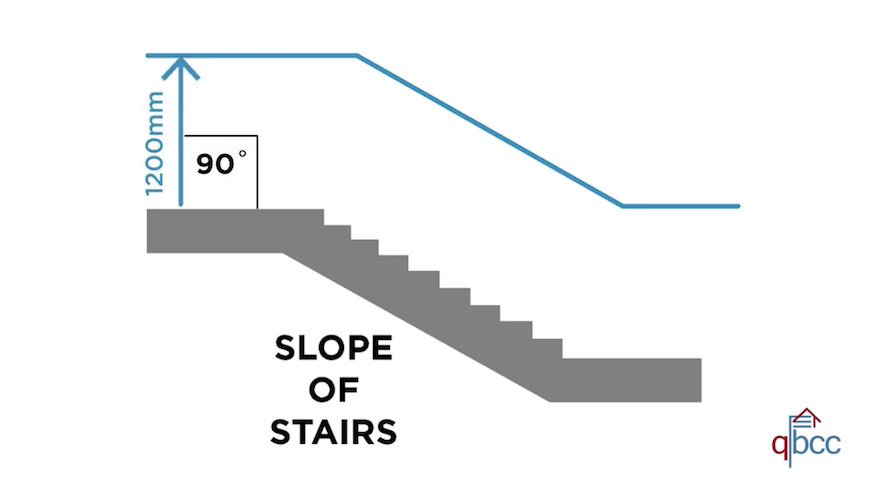
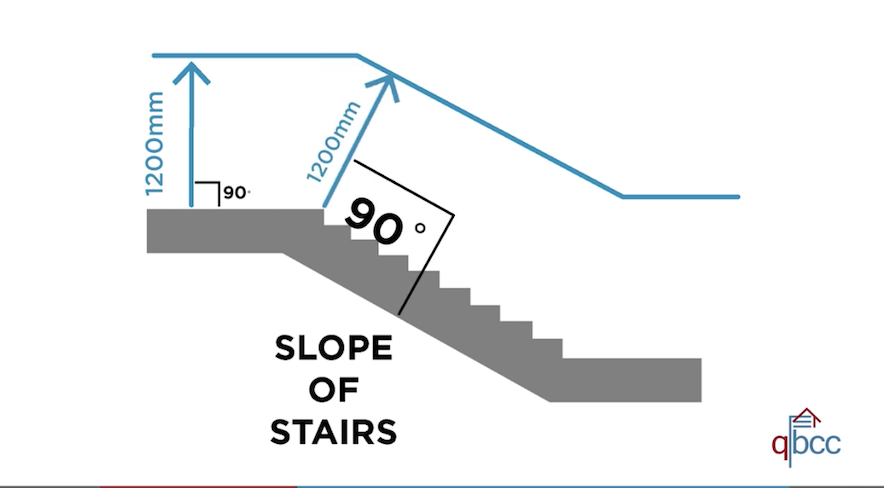
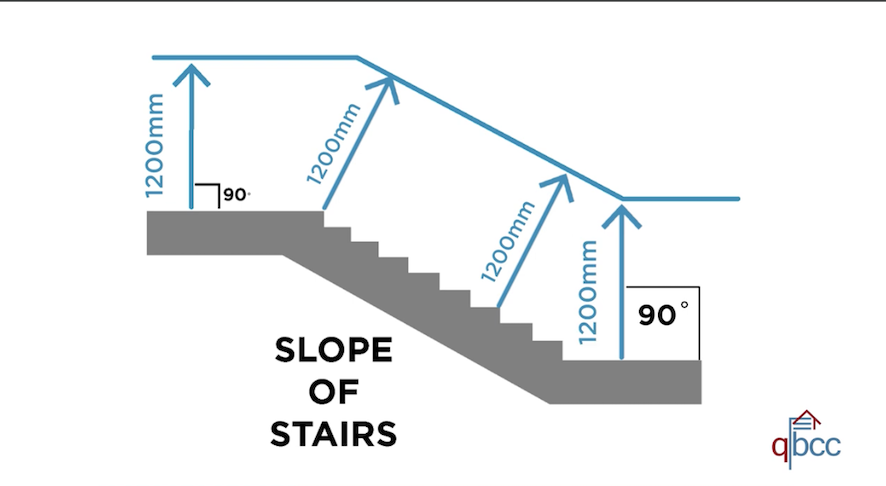
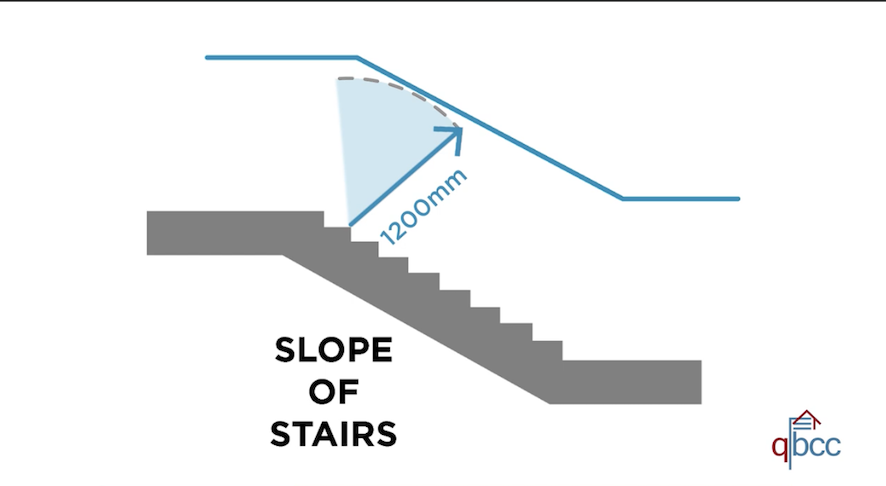
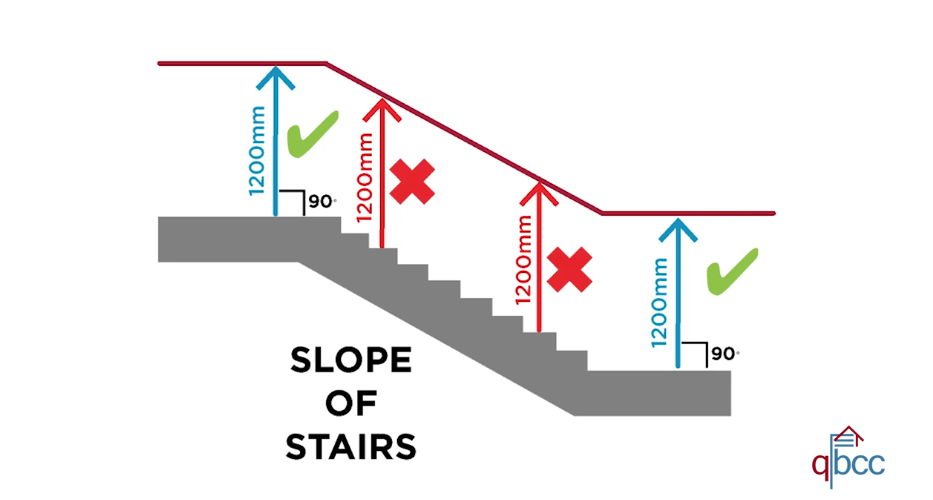
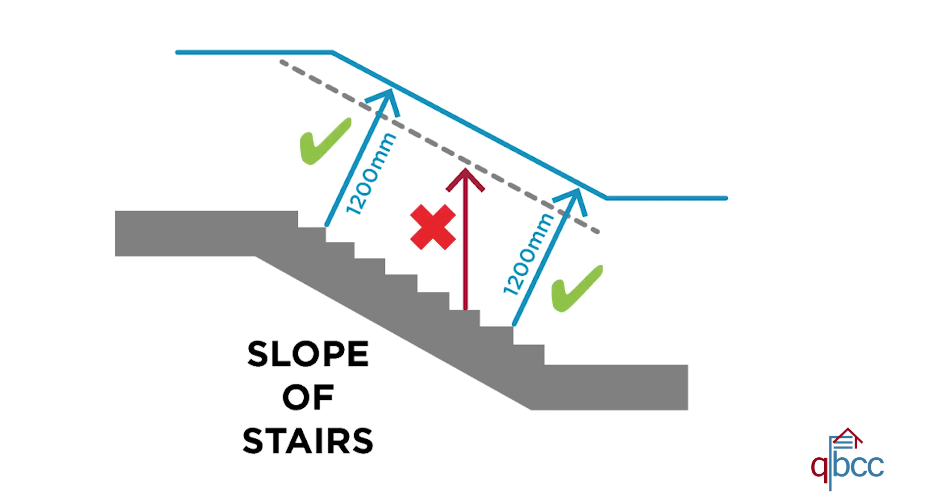
A pool barrier must be at least 1200mm high. Where the barrier runs alongside a flight of stairs, that 1200mm is measured perpendicular (90°) to the slope of the stairs — not straight up from the tread. That means a sloping barrier needs to be a touch taller than a standard fence to stay compliant.
No Gaps Greater Than 100mm
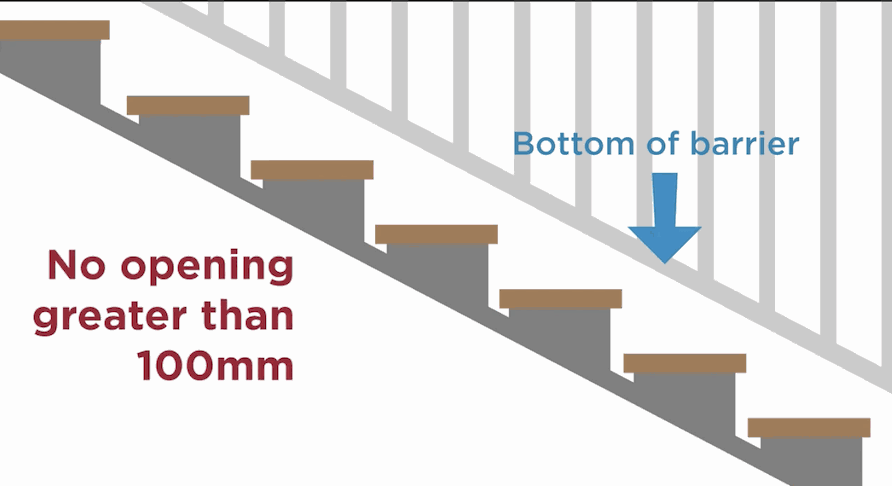
The bottom of the barrier needs to follow the line of the stairs closely. Any opening between the bottom rail and the step that lets a 100mm sphere through is a fail — that's the rule that stops a small child squeezing under. On stair runs this often means the fence has to step down with the treads or sit on a continuous plinth.
Balustrades Count Too — 100mm Vertical Rule
If a balustrade alongside the stairs is doing the job of the pool barrier, it has to play by the same rules. The vertical members (the uprights) cannot be more than 100mm apart. Plenty of architectural balustrades are built to building-code spacings that are wider than this — they look great, but they won't pass a pool safety inspection.
⚠️ Watch Out for the "Ladder Effect"
Stairs running next to a pool barrier often create what inspectors call a ladder effect. Each tread gives a small child a foothold, and the next tread gives them another — basically letting them scale the barrier like a little monkey straight into the pool area.
This is why stairs are one of the trickiest scenarios on a pool inspection. The barrier might look tall enough at first glance, but the steps themselves can turn it into a climbing frame. If you're building or renovating near stairs, get an inspector involved before the fence goes in — it's much cheaper than fixing it later.
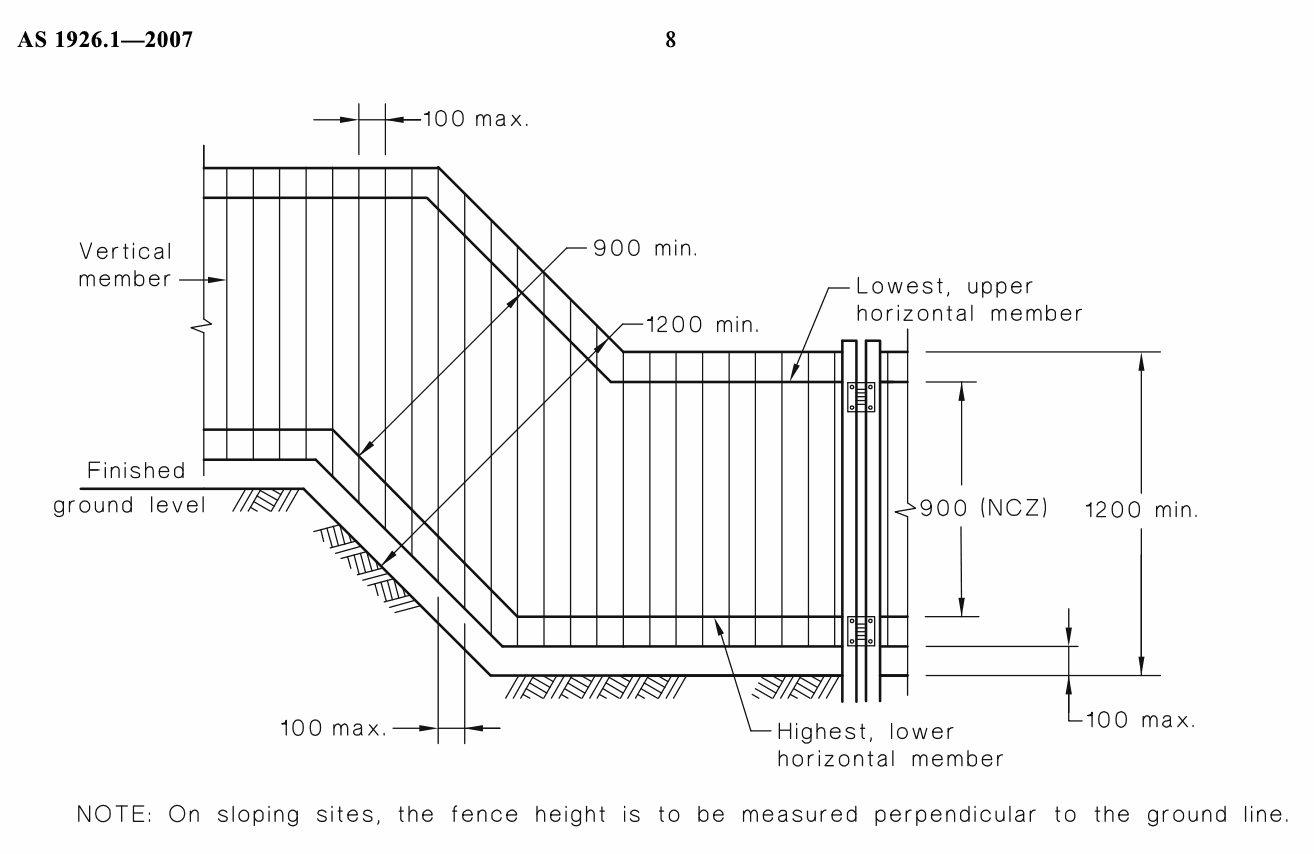
Sloped Ground — From AS 1926.1-2007 and AS 1926.2-2007
The same logic applies on any sloped ground next to a pool barrier. This diagram from AS 1926.1-2007 and AS 1926.2-2007shows how the 1200mm minimum height, 100mm maximum gap, and the 900mm Non-Climb Zone (NCZ) all stack together when the ground falls away.
Watch the QBCC Explainer
The QBCC put together a short video that walks through exactly how stair measurements work. Worth a look if you want to see it in motion.
Open on YouTube✅ Quick Checklist
- • 1200mm minimum height, measured perpendicular to the stair slope
- • Check the height at the top, the bottom, and along the run
- • No gap under the barrier greater than 100mm — at any step
- • Balustrade verticals no more than 100mm apart
- • Watch for the "ladder effect" — treads can let kids climb the barrier
- • Treat the inside of the barrier as the Non-Climb Zone too — keep it clear
- • If in doubt, ask a pool safety inspector before you build