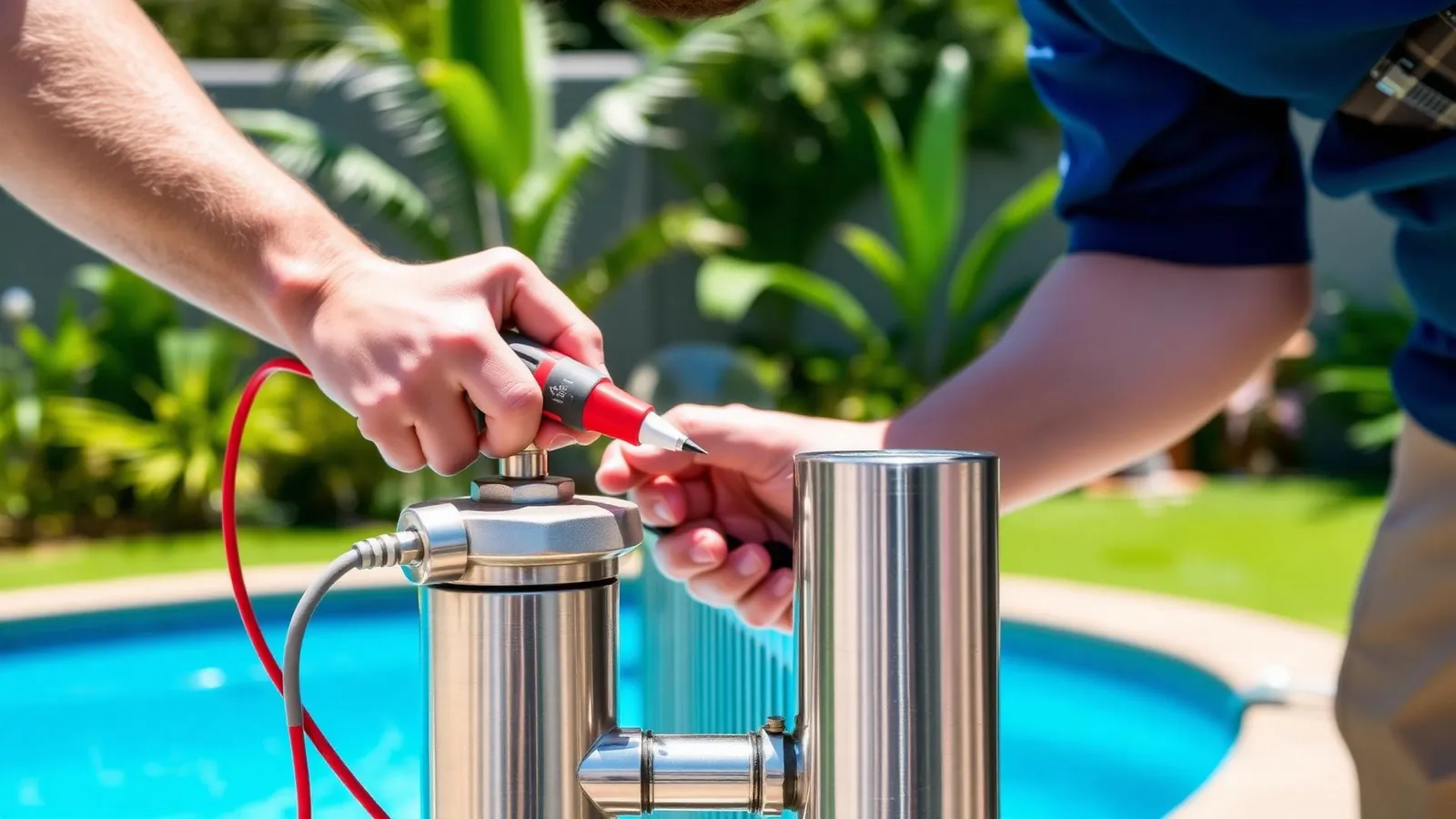
Pool Electrical Safety ⚡
Water and electricity don't mix. Here's what every Queensland pool owner needs to know about equipotential bonding, safety switches and keeping your pool electrically safe.
Why This Matters — It Can Be Invisible & Fatal 💀
Faulty pool lighting, degraded wiring, missing bonding conductors and absent safety switches can all introduce electrical current into pool water. Even a very small voltage can cause muscle paralysis in a swimmer, leading to what's known as electric shock drowning.
The person can't call for help, can't swim to the edge, and may appear to simply be floating. You can't see, smell, or hear an electrical fault in the water. By the time someone feels a tingling sensation or muscle cramp, the situation is already critical.
Bare feet and wet skin lower the body's electrical resistance, meaning the effects of an electrical shock on a person in or near water are far more severe than in other locations.
Equipotential Bonding ⚡
Under AS/NZS 3000 (the Australian Wiring Rules), all conductive metal parts within 1,250mm (1.25m) of the pool edge — arm's reach of a bather — must be electrically bonded to the main earthing system.
This ensures all metal components have the same electrical potential, so if a fault occurs there's no dangerous voltage difference between surfaces a swimmer might touch. This work must be performed by a licensed electrician.
For concrete pools and spas with steel reinforcing, the reinforcing mesh must also be bonded to the earthing system. An electrician should attend site before concrete is poured so bonding can be installed and tested.
What Must Be Bonded?
Metal pool fences and gates
Stainless steel spigots on glass fencing
Ladders, handrails and diving boards
Reinforcing mesh in concrete pool shells
Underwater light fittings
Pool pump housings and motors
Metal shade structure supports
Jets and water features
Glass Pool Fences — Do They Need Earthing? 🔍
If your glass fence uses stainless steel spigots within 1.25m of the pool edge, they must be bonded to the earthing system under AS3000:2018. Stainless steel is conductive and can become electrically charged from a fault or lightning.
A common solution requires running an earth wire underground between each spigot to an earthing point — this must be done by a qualified electrician.
Alternatives to avoid earthing costs:
Non-conductive spigots — thermoplastic insulated sleeves that are fully compliant with AS3000
Recessed concrete channel — no conductive material used, exempt from AS3000 bonding requirements (must be planned before concrete is poured)
Safety Switch (RCD) Protection 🛡️
Every circuit supplying electrical equipment in and around the pool must be protected by a safety switch (RCD). This includes pool pumps, lighting, chlorinators and heating systems.
The safety switch monitors for current leakage and trips in milliseconds if it detects a fault — cutting power before the current can reach a person.
Test your safety switch every 3 months by pressing the 'T' button. If it trips the power off, it's working correctly.
Earthing Is NOT a Fail Item! ⚡
A pool safety inspector cannot fail a pool safety inspection because a metal pool barrier is not earthed.
At Pool Inspector G we believe it's important that all pool owners are aware of the legislation around this. If we are unable to ascertain whether your metal pool barrier is earthed, it will be identified as a note in your pool safety report — it is simply a note, and will NOT fail your inspection.
The risk of having a non-earthed metal fence is absolutely a risk to be borne by the pool owner. We strongly encourage you to engage a licensed electrician to assess and bond your metal barriers — but legally, it is not part of the pool safety standard pass/fail criteria.
Warning Signs of Pool Electrical Problems ⚠️
Tingling in the Water ⚡
If anyone reports a tingling or prickling feeling in the pool — especially near metal fittings like ladders or handrails — get everyone out immediately. This is the most direct warning sign of stray electrical current and should be treated as an emergency.
Flickering Pool Lights 💡
Flickering or intermittent underwater lights can indicate moisture has entered the light housing, compromising the seal between electrical components and pool water. Visible condensation inside the lens needs immediate attention from a licensed electrician.
Safety Switch Keeps Tripping 🔌
If the RCD (safety switch) on your pool circuit keeps tripping, don't just keep resetting it. It's detecting a genuine current leak — common causes include degraded pump wiring, a failing chlorinator cell, or water ingress into a junction box.
Corrosion on Components 🔧
Visible rust, green oxidation, or white salt deposits on pump housings, junction boxes, or cable connections are signs that moisture is attacking the electrical system. In coastal Brisbane suburbs, salt air accelerates deterioration significantly.
If Anyone Reports Tingling in the Water — Act Immediately! 🚨
Get everyone out of the pool. Do NOT touch anyone still in the water until the power has been turned off at the main switch. Call 000 (or 112 from a mobile) immediately. If the victim is not breathing, begin CPR.
Keeping Your Pool Electrically Safe 🔒
Don't position lights or electrical appliances where they could fall or slide into the pool
Use safety switches (RCDs) — they cut electrical current in a fraction of a second
Ensure waterproof covers on electrical equipment are kept in place at all times
Regularly check underwater lights for cracks and defective seals
Keep all electrical appliances, extension leads and cords well away from water
Have a licensed electrician carry out regular maintenance on all pool electrical systems
Equipment using mains power (lights, pumps) must be installed by a licensed electrician
Never attempt to do your own electrical work — it's dangerous, illegal and can be fatal
What Queensland Law Requires ⚖️
Equipotential Bonding
All conductive parts within 1.25m of the pool edge must be bonded to earth under AS/NZS 3000. Only a licensed electrician can install or alter bonding conductors. Penalties apply for non-compliance.
RCD Protection
Every circuit supplying pool equipment (pumps, lights, chlorinators, heaters) must be protected by a safety switch (RCD) that trips in milliseconds when a fault is detected.
Electrical Zones
AS/NZS 3000 defines restricted zones. Zone 1 extends 2m from the water's edge — no switchboards, power points, switches or light fixtures are permitted within this area.
Important: Pool Safety Certificate ≠ Electrical Inspection
A pool safety certificate covers barrier compliance (fencing, gates, latches). It does not cover the pool's electrical system. A separate electrical safety inspection by a licensed electrician is needed to check bonding, safety switches, wiring condition and zone compliance. We always recommend having your pool electrics checked alongside your barrier inspection.
Questions About Pool Safety? 📞
While we don't do electrical work, we can point you in the right direction and make sure your pool barrier is compliant.