Boundary Fences
When it comes to using your boundary fence as part of the pool barrier, you've really only got two options. Here's the plain-English version of both — plus the one trap that catches almost everyone out.
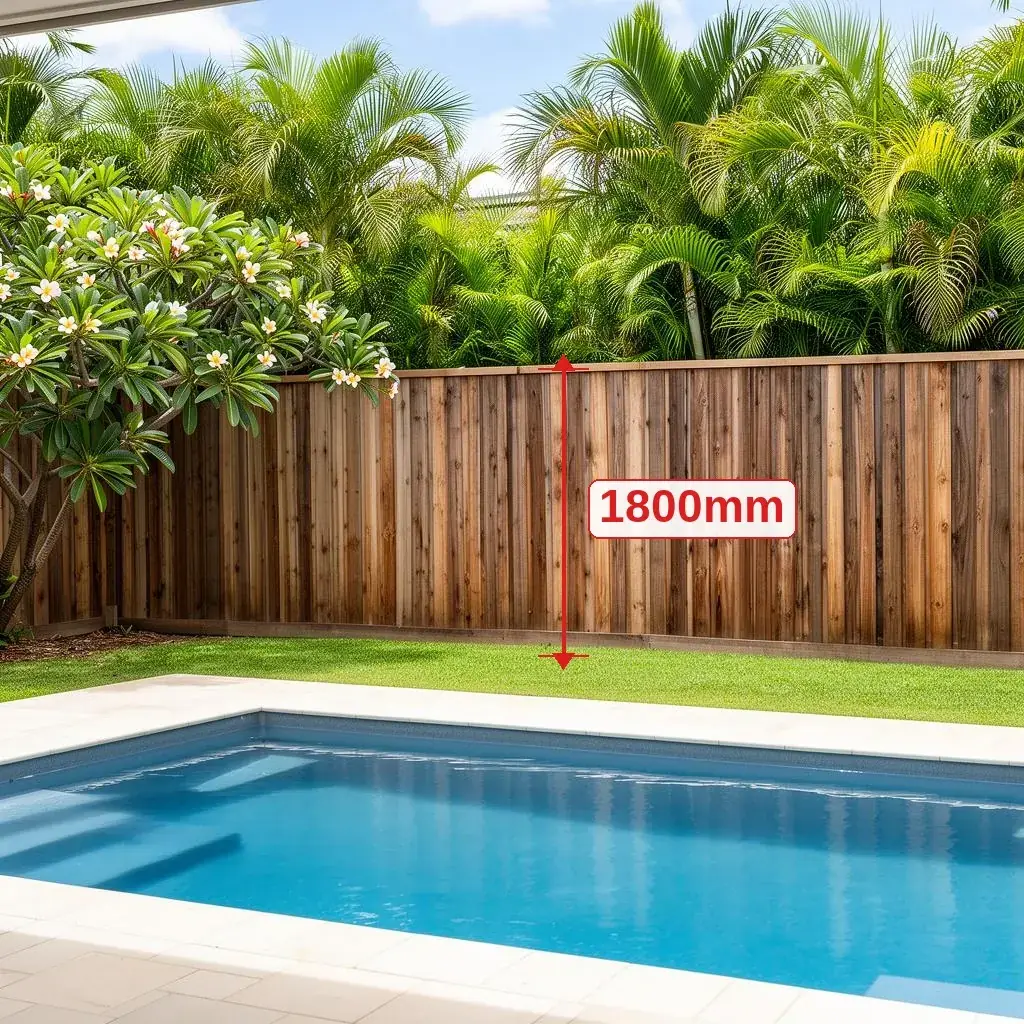
More About Boundary Fences & Pool Barriers
This guide is a plain-English summary. If you'd like to dig deeper into how boundary fences work as pool barriers in Queensland, the QBCC has extra reading that covers the topic in more detail.
Option 1
Is your boundary fence less than 1800mm?

Option 2
Or is it a minimum of 1800mm?
The two options you've got
As a regulated pool owner in Queensland, there are essentially two paths to getting your boundary fence compliant:
- Option A — The default position: a min 1800mm boundary fence so you can use the NCZ 5 rule on your side aka use your side for / to get compliance.
- Option B —(Bi): extend the height of the boundary fence to 1800mm, or B(ii) last resort, use the neighbour's "approach side" for compliance.
Option A · The preferred way
1800mm boundary fence - NCZ 5
The default position is that your boundary fence should be a minimum of 1800mm high. Get that right and you can take advantage of the NCZ 5 rule — a 900mm non-climbable arc measured from the top of the boundary fence, sweeping inwards horizontally and down inside the pool area.
Inside that arc, nothing can be climbable — fence posts, horizontal fence railings, hooks, vines, vegetation, the lot.
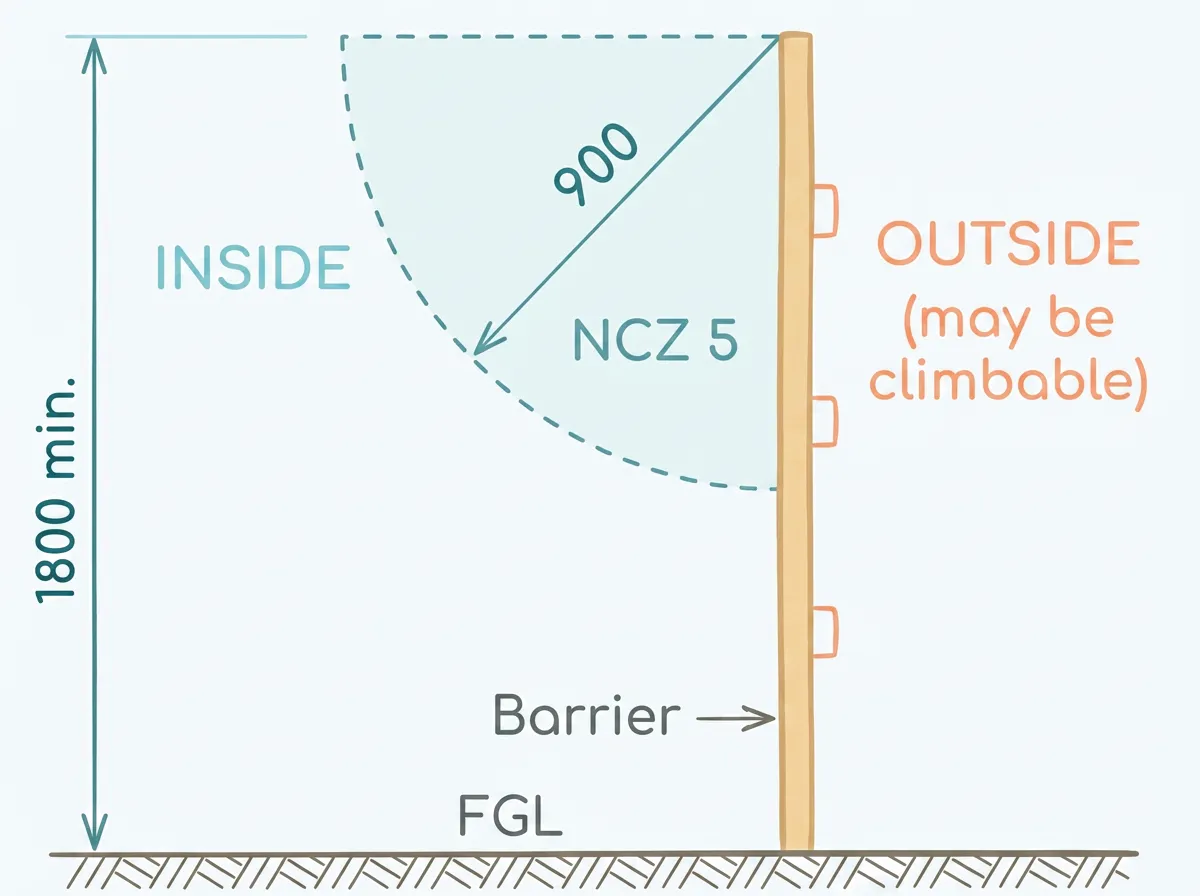
Here's the kicker — the neighbour's side can have every conceivable climbable thing on it (sheds, BBQs, pot plants, the lot) and that's genuinely not your concern under Option A. What NCZ 5 is really saying is that height itself is most of the deterrent. To a 0–4 year old, an 1800mm fence is a seriously scary height — but that only holds true if there's a clean non-climb zone on your side so they can't shortcut their way to the bottom!
✅ Why this is the preferred approach
You have absolute control over your side of the fence. Option A is by far the easier, cleaner way to get compliance — no neighbour negotiations required.
Option B · When the fence isn't 1800mm
Extend it, or use the neighbour's "approach side"
Not every boundary fence is 1800mm at a minimum. So what do you do? You've really got two sub-options:
B1 · Extend the fence height up to 1800mm
Top it up to the minimum 1800mm — but be careful you don't build the extension in a way that creates foot or handholds, or anything climbable.
B2 · Use the neighbour's side ("approach side") for compliance
That's usually the harder path — you've got very little control over what's on the other side of the fence. If you go this way, then NCZ 1, 2, 3 and 4 all apply on the approach side, just as if you were trying to get compliance on an internal pool barrier seperating your home from the pool area.
Sometimes you strike gold and the neighbour's side is super clear. More often than not though, there are trees, sheds, racks, storage and goodness knows what else making it really hard. Plus the neighbour-relationship side of things isn't always easy. So in many cases, pool owners simply opt to extend the height instead.
Watch-outs when extending the height
Extensions are a great fix, but they introduce their own little gotchas. Make sure your extension doesn't:
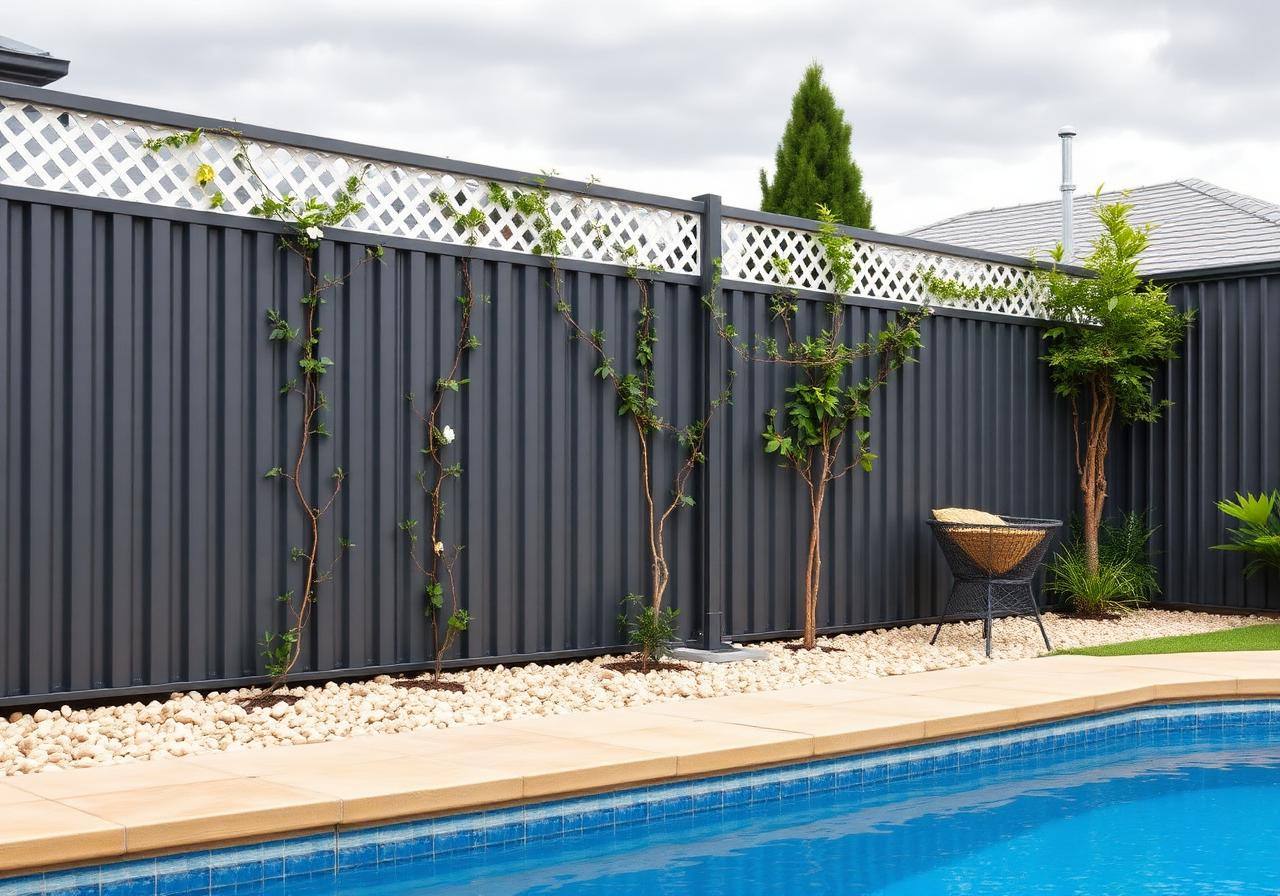
- Create gaps greater than 10mm — e.g. lattice work or Colorbond slats with large gaps between them.
- Inadvertently create a ledge on top of the fence where the extension meets the original fence.
- Leave horizontal beams exposed on your side.
The often-forgotten FGL trap
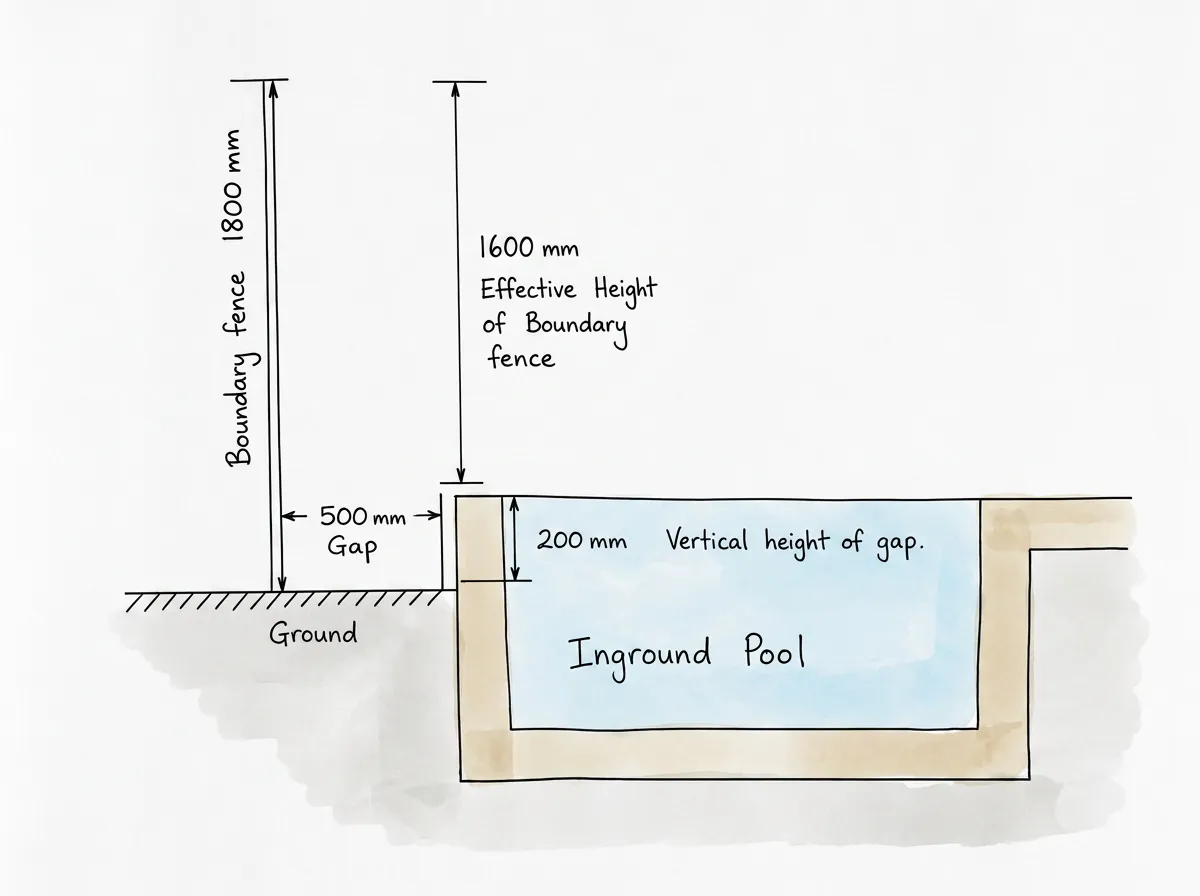
Here's the one that catches a lot of pool owners out. Sometimes the ground where the boundary fence is anchored means the actually height of the boundary fence from ground it is anchored to the top is actually 1800mm — but when something like a raised garden bed, or the paving around the pool itself is super close to the boundary fence and is slightly raised off the ground (see image), this sadly reduces the effective height of the boundary fence so is no longer compliant.
This is almost always a problem when the gap between boundary and pool is small aka is anything up to about a meter away from the fence itself.
📏 The rule
The measurement from FGL (Finished Ground Level) must be taken from the highest point on the ground adjacent to the fence — not from what the actual boundary fence is anchored to.
What counts as FGL? It includes finished pavers, concrete, compacted soil, garden beds, or the top of a retaining wall — to name just a few — anything that abuts the fence or is considered close enough.
Common boundary fence failures
The five things I see again and again — and how to sort each one before inspection day.
Fence under 1800mm from the neighbour's side
✅ Fix: Top up the height with a fence extension, or build an internal pool fence offset from the boundary.
Garden beds, AC units or BBQs within 900mm
✅ Fix: Move the climbable object outside the 900mm NCZ measured from the top of the boundary fence.
Horizontal rails on your side acting as a ladder
✅ Fix: Cap the rails, install perforated mesh, or build an internal pool fence so the boundary fence is no longer the barrier.
Damaged palings or gaps over 100mm
✅ Fix: Replace damaged palings and close any gap. Rotten timber at the base is one of the most common failures.
Neighbour's tree or shed climbable from the other side
✅ Fix: You're still responsible. Talk to your neighbour, or set the pool barrier back from the boundary so it's no longer affected.
Not sure if your boundary fence will pass?
I'll come out, take a look from both sides, and tell you straight whether it'll pass — and what to do if it won't.